“Wisdom is not a product of schooling but of the lifelong attempt to acquire it.”
– Albert Einstein.
A new term stretches ahead into the next ten weeks.
I am fond of the beginning of term, it’s certainly never boring. I facilitate 3 study groups. Each term, each group is different, made up of a varying configuration of people. Every group has its own magic, its own vibration, and its own group soul cleaved from the collective energy of the group.
I have learned to listen to the voice of the group soul.
Its wisdom and insight never fail to amaze me. In how it inspires the right thing to do at the right time, for the good of the group and where the group is concerned. What makes the whole stream of unfoldment even more interesting is I get to learn too. It is a never-ending process, thankfully.
It’s like we are all spiritual teachers to each other.
A question often asked is, are we born with Tarot skills or is it something we have to learn?
I’m not sure that there is a stock answer to this. I would say, firstly, Tarot finds us, we don’t find Tarot. This implies that one is meant to journey with the cards in some shape or form. If this is the case, then another implication might be that those ‘found’ would have an inkling of how to read them.
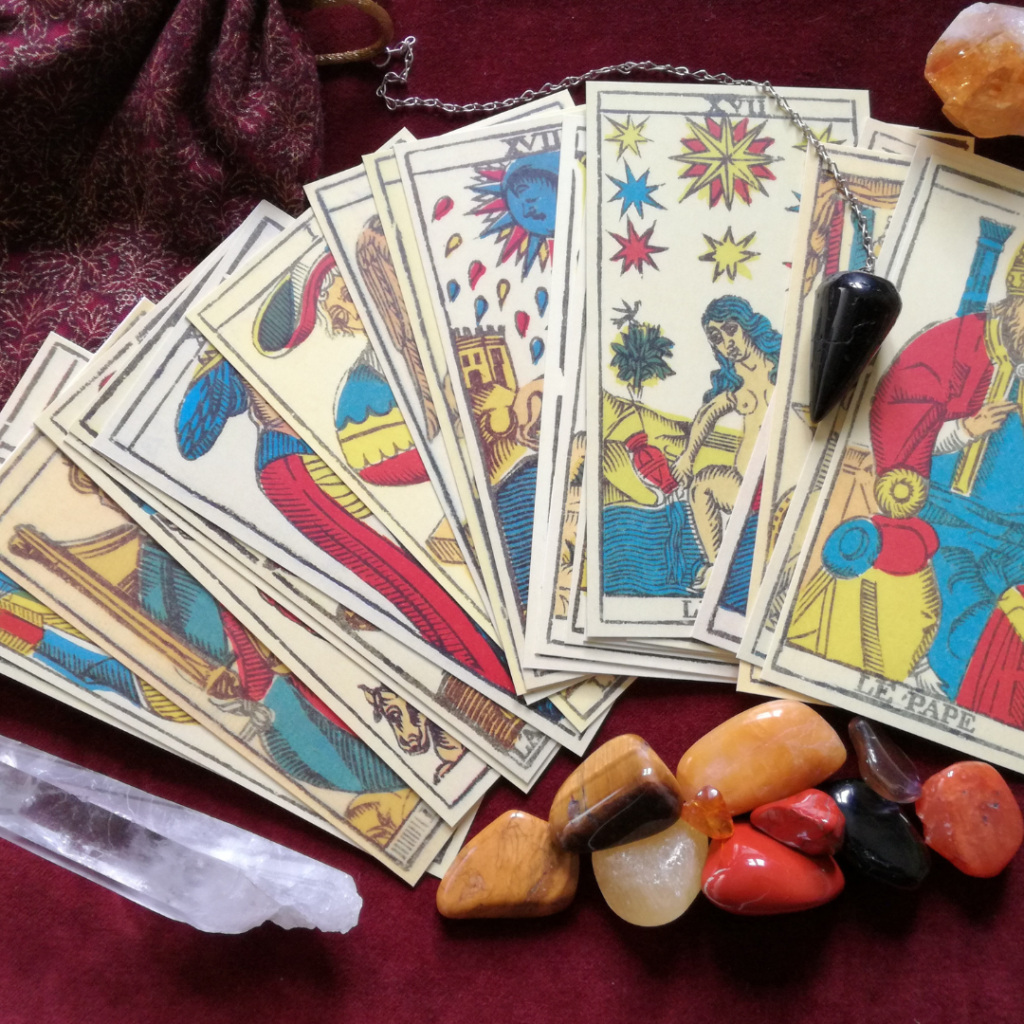
So, what is Tarot?
Perhaps they are but pieces of cards adorned with various images, which only mean something when we apply that meaning. Perhaps they are a picture language given to us by a higher being in order for us to understand the chaos we are born into. Perhaps they are a mirror image of the divine at work amongst us. Or, Perhaps they are a description of the internal landscape as it shapes and shifts and then the external dynamics as a result of the shifting.
However, Tarot may be described.
It is arguably a powerful resource for self-discovery and a navigational tool, a spiritual GPS, that steers us into observing our life from a relevant vantage point.
There are many ways to learn Tarot.
Just as there are many ways to read the cards. Each reader has their own peculiar slant on the cards. A unique style of reading. However, I am a bit old-fashioned and I firmly believe that a good starting point is to get to know the symbols and archetypal images in the cards. Tarot readers are good at that, reading symbols, after all the world speaks to us in symbols all the time, we Tarot folks have a knack for putting them all together to make sense.
Once you have an idea of how the symbols weave together you can build on your interpretations and enjoy exploring the world through a whole new window.
BASIC TIPS FOR LEARNING TAROT.
- Avoid complex decks for your studies. The Rider Waite Smith deck is a good one for getting the meanings of the cards under your belt.
- Don’t try to remember great swathes of information. This will only put you under pressure and be counterproductive.
- Summarise your notes for each card in keywords. These will help you in accessing the information quickly. Add some of your own to the tried and tested.
- Each card is a psychic trigger, do take note of impressions or feelings as they emerge.
- Try applying your own life experience to an interpretation of the card.
- Draw a card of the day and in the evening see how the card mirrors what might have occurred.
- Look out for similar symbolism and meanings in movies, art, and literature.
- Do put your cards on one side sometimes, and take a break when necessary, overload can be chaotic.
- Invest time and energy into a course and facilitator. Be guided through the cards, structure is helpful in the beginning.
- Don’t limit yourself to what can be learned or how long it may take. Tarot is a lifelong journey of exploration and evolution.
If you’re a beginner you can share your Tarot questions in our group, and if you’re experienced in Tarot please come and share your knowledge. You’ll find the group here – Exploring Tarot Facebook
I’ve been writing blog posts on spreads, insights, and Tarot teachings for several years, feel free to pursue them here, and I hope you’ll find some inspiration on your tarot journey.